A custom biomass power generation plant converts the residue of an industrial site into electricity, heat and char, and that conversion replaces a disposal bill with a waste-to-energy revenue stream. You, as an industrial company manager or as a project developer, examine the custom biomass power generation plant against the residue volume of the site. The plant then serves the factory instead of a distant landfill.
Which disposal costs does the plant replace?
The landfill fee, the transport of the residue and the administrative cost of the manifest form the disposal bill of the site. A waste disposal cost reduction with biomass power review compares that bill with the operating cost of the plant, and the difference is the monthly saving. You also include the energy that the plant delivers to the factory. The result then shows the payback of the investment.
How does the plant deliver the saving?
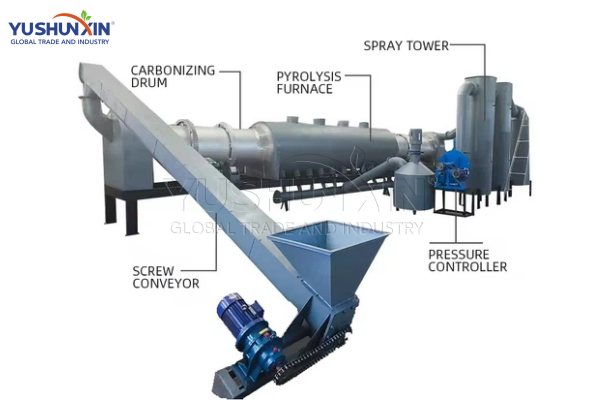
The plant burns the syngas to produce heat and electricity, and the carbonization section converts part of the residue into char. A continuous furnace for biomass power savings design holds a stable thermal profile, and that stability protects the availability of the line. You measure the output per tonne, and that figure confirms the saving. The factory then pays less for both energy and disposal.
Which industrial companies benefit most?
A company that processes rice, palm, wood or food residue has a continuous supply and a steady energy demand, and those two conditions make the project attractive. The disposal cost savings for industrial companies also grow with the local landfill tariff, because a higher tariff raises the value of the avoided disposal. You compare the two variables before the design. The business case then rests on measured data.
How does the company verify the saving?
A monthly report with the residue diverted, the energy delivered and the disposal avoided gives the finance team the result. You compare that result with the baseline of the previous year, and the comparison shows the benefit of the plant. The report also records the downtime, because a stop reduces the saving. The board then decides on the second phase with evidence.
Conclusion for industrial companies and project developers
A biomass power plant cuts disposal costs when the residue volume matches the plant and when the energy replaces purchased fuel, and the measured saving proves the case. A biomass power cost advisors team that supplies the residue survey, the energy balance and the cost model helps the company present a case that the board accepts. The disposal fee keeps rising in most regions, and a plant that converts the residue protects the operating budget. If your team needs a reference for the line configuration and the cost scope, you can learn more about https://www.ysxcharpro.com/product/palm-charcoal-production-line/ before the next investment review. The same cost model also supports the annual review of the plant budget, and that review keeps the disposal saving visible to the finance team during the operating year. That figure also supports the next budget cycle of the plant.