The continuous carbonization production line process flow moves biomass through drying, feeding, carbonization, cooling, screening and packing, and the line reaches its full capacity only when each step delivers at the rate of the next. You, as a plant manager or as a project developer, examine the continuous carbonization production line process flow with the capacity of each unit in one table. The process flow diagram then shows the bottleneck before the plant starts.
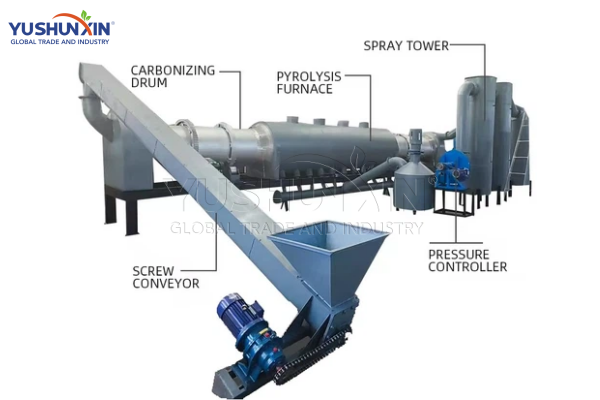
Which steps precede the reactor?
The receiving area, the shredder and the dryer prepare the biomass, and each of them must deliver a feedstock with a stable moisture and size. A process steps for full capacity carbonization review measures the moisture of each delivery, because a wet load reduces the effective capacity of the reactor. You keep a buffer of dry feedstock for the days on which the dryer runs below its rate. The feeding screw then delivers a steady flow to the reactor.
How does the reactor stay at its design rate?
A continuous reactor with a controlled residence time holds a stable thermal profile, and that stability allows the operator to predict the output of each hour. An operating steps for a continuous carbonization line procedure fixes the temperature, the screw speed and the gas return, and those three settings decide the yield. You record them at the start of each shift, because a small change in the screw speed moves the output. The palm charcoal line process steps follow the same logic with a different feedstock.
How do cooling and screening protect the throughput?
The cooling drum must accept the full output of the reactor, because a slow cooling stage forces the reactor to wait. You size the drum for the maximum rate and add a second discharge line, and that arrangement removes the waiting time. The screening deck then separates the fine fraction that the briquette press can use. The packing line closes the flow and gives the shipping document a verified tonnage.
Which data shows that the line runs at full capacity?
The hourly output, the moisture of the input and the hours of unplanned stop form the three figures that the manager reviews each day. You compare them with the commissioning baseline, and the comparison shows whether the line still performs as designed. The plant that publishes the figures to its team corrects a deviation early. The monthly report then supports the decision on a second line.
Conclusion for plant managers and project developers
Full capacity results from a balanced flow between drying, carbonization, cooling and packing, and each step needs its own capacity check. A carbonization process advisors team that supplies the flow diagram, the capacity table and the operating procedure helps the plant reach its rated output. The demand for char and for removal units keeps the line valuable, and a plant that runs at full capacity serves that demand at a lower unit cost. If your team needs a reference for the line configuration and the process scope, you can learn more about https://www.ysxcharpro.com/how-does-the-continuous-carbonization-furnaces-work/ before the next review.