An industrial plant that burns residue in an open or poorly controlled process releases dust, carbon monoxide and unburned hydrocarbons, and those emissions attract both regulatory attention and community complaints. You, as an industrial plant manager or as a project investor, evaluate a continuous carbonization furnace environmental compliance package as a way to convert residue inside a sealed process. The continuous carbonization furnace environmental compliance package then replaces an uncontrolled combustion step with a documented thermal route.
Which emission sources does the technology eliminate?
The sealed reactor prevents the release of pyrolysis gas to the atmosphere, because the process routes that gas to a burner or to a heat recovery loop. Controlled combustion reduces carbon monoxide and unburned hydrocarbons that appear in an open burning operation. The dust collector captures the fine char that the discharge and screening sections release. Your engineering team maps these three sources on the layout drawing, and that map defines the monitoring points of the installation.
Which equipment supports the compliance target?
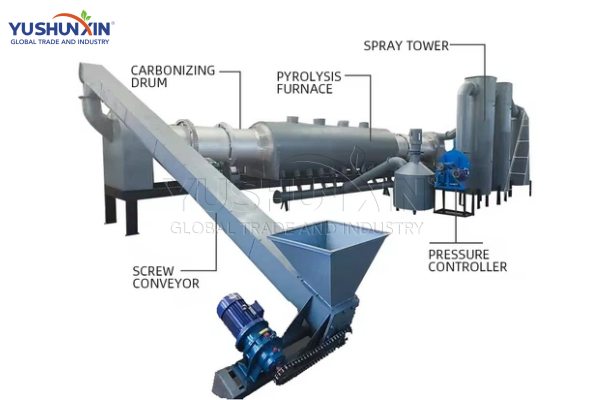
A sealed feeder, a reactor with pressure control and flame arrestors, a cyclone, a bag filter house, a scrubber for the flue gas and a monitoring cabinet form the technical answer of the plant. Each item of treatment equipment carries a design duty, and that duty must match the worst feedstock condition. A emission reduction with continuous carbonization technology review sizes the filter area and the fan pressure with a margin. Your team records the pressure drop of each unit to plan the cleaning cycle.
How does the process reduce emissions per tonne of product?
The internal gas loop replaces external fuel, and that substitution reduces both the fuel purchase and the emission associated with that fuel. Continuous operation avoids the repeated start up and shut down cycles that produce unstable combustion in batch equipment. An industrial plant carbonization emission control report records the specific emissions per tonne of char, and that figure becomes the benchmark for the annual environmental report. A charcoal briquette line for industrial plants also benefits from the cleaner gas, because the burner that serves the dryer receives a stable fuel.
How do you document the improvement for the authority?
The permit file describes the process change, the emission calculation and the monitoring plan, and it compares the new installation with the previous practice. Your team also records the operating data of the first three months, because that record demonstrates that the plant runs inside its design envelope. The authority then reviews one consistent data set, and the plant manager keeps the same record for the internal environmental report.
Conclusion for industrial plants and project investors
Continuous carbonization converts an uncontrolled residue burning practice into a sealed process with measurable emissions. A carbonization emission reduction advisors team that supplies process data, gas cleaning design and commissioning support helps the plant reach its permit conditions in the first month. A cleaner process also protects the workforce and the neighbouring community, and that protection sustains the operating licence. If your team needs a reference for the emission control scope, you can learn more about https://www.char-molder.com/product/continuous-carbonization-furnace/ before the permit application.