Overview: What a Complete Hookah Charcoal Line Produces
A complete hookah charcoal production line is designed to turn biomass-based carbon (often coconut shell charcoal) into uniform, low-ash, long-burning briquettes that light easily and produce minimal odor. Most commercial lines focus on cube or hex shapes, consistent density, and controlled moisture so the finished product performs reliably in cafés and retail packs. Planning the line correctly means thinking beyond a single machine: you need stable raw materials, dust control, drying capacity, and packaging that protects the product from humidity and breakage.
Core Equipment List (From Raw Material to Briquette)
The typical line begins with crushing and grinding equipment to reduce charcoal lumps into a consistent powder. A vibrating screen removes oversized particles and improves uniformity. Next is mixing, usually with a ribbon blender, where charcoal powder is combined with a binder (commonly starch) and water; precise dosing matters because binder affects ash content, strength, and burn time. The heart of the line is the briquette press—hydraulic, mechanical, or screw-based—paired with interchangeable molds for cube sizes (such as 22–26 mm). After shaping, a dryer (tray dryer, tunnel dryer, or conveyor dryer) brings moisture down to a stable level to prevent cracking and mold during storage.
Supporting Systems You Shouldn’t Skip
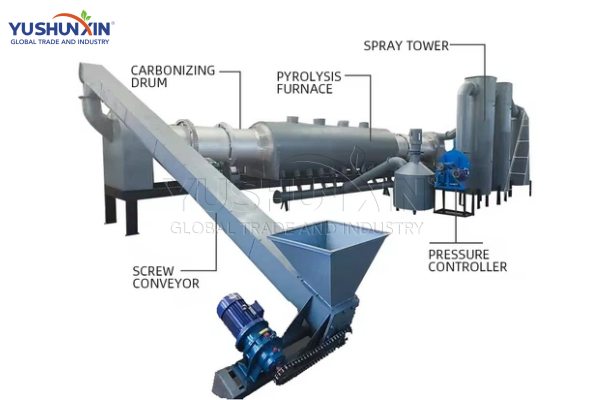
Production lines run smoother with the right “invisible” equipment: dust collection systems (cyclone + bag filter) to keep the plant clean and reduce fire risk; conveyors and elevators to cut labor and avoid contamination; and quality control tools like moisture meters, scales, and simple drop-test procedures for strength. If you are carbonizing biomass yourself, you’ll also need a carbonization kiln, a cooling/handling area, and potentially a smoke treatment system depending on local environmental rules.
Packaging and Logistics for Commercial Sales
Hookah charcoal is fragile and sensitive to humidity, so packaging is part of the production line. Many plants add an automatic weighing and packing machine, inner plastic bags, and outer cartons with shrink wrapping for pallet stability. Budget for storage racks and a dry warehouse area; even premium charcoal can lose market value if it absorbs moisture or arrives broken.
Investment Guide: What Drives Cost
Your total investment depends mainly on capacity (kg/hour), automation level, drying method, and whether you purchase ready-made charcoal or produce it in-house. A small semi-automatic line may require modest capital but higher labor, while a larger automated line needs higher upfront spending on presses, dryers, conveyors, and dust control—yet usually lowers unit cost and improves consistency. When comparing suppliers, ask for power consumption, spare parts lists, mold lifespan, guaranteed output, and a commissioning/training plan, because these details often determine profitability more than the headline machine price. Visiting: https://www.ysxcharpro.com/product/hookah-charcoal-production-line/
Leave a Reply