Overview: What You’re Really Paying For
A complete charcoal briquette production line price is not just the cost of a briquette press. It’s the total investment required to move from raw material collection to stable, sellable briquettes—consistently shaped, properly dried, and packaged for your target market. Pricing varies by capacity (e.g., 500 kg/h vs. 3–5 t/h), automation level, and whether you use carbonized charcoal fines or make charcoal from biomass first. When budgeting, separate your costs into equipment, installation, utilities, labor, and ongoing consumables, because profit depends on the full system, not one machine.
Raw Materials: Cost, Consistency, and Preparation
Your raw material can be charcoal powder/fines, sawdust, rice husk, coconut shell charcoal, or mixed biomass residues. The biggest “hidden” cost is consistency: if moisture, particle size, or ash content fluctuates, your output quality drops and waste increases. Many producers invest early in screening and grinding to standardize feedstock. You may also pay for storage sheds or silos to keep material dry, plus transport costs if you’re collecting residues from multiple suppliers.
Core Equipment: The Heart of the Production Line
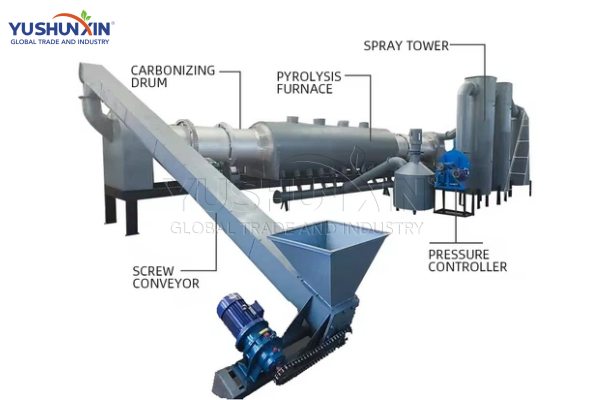
A typical line includes a crusher or hammer mill, a dryer (rotary or belt), a mixer, a binder dosing system, a briquette press (screw extruder or stamping press), a cutting unit, and a final drying/curing section. Optional but common additions include a carbonization furnace (if starting from raw biomass), a cooling conveyor, and dust collection for safety and housekeeping. The press type strongly influences price and performance: screw extrusion lines often suit shisha/hookah or BBQ briquettes with a central hole, while stamping presses are widely used for pillow-shaped briquettes and high throughput.
Installation, Utilities, and Factory Setup
Beyond equipment purchase, plan for foundations, electrical cabinets, wiring, conveyor supports, and commissioning. Power consumption depends on drying and milling, while fuel costs rise if you heat a dryer using biomass, gas, or diesel. You’ll also need space for drying racks or tunnels, ventilation, and basic lab tools to check moisture and compressive strength. These setup items can materially change the “real” line price even if the machine quote looks attractive.
Operating Costs and Profit Drivers
Profit comes from the gap between input cost per ton and selling price per ton, minus utilities, labor, binder, packaging, and maintenance. Binder (starch, molasses, or specialized additives) is often a major recurring expense, so optimizing binder percentage without losing strength is key. Packaging choice—bulk sacks, branded retail bags, or shisha-grade boxes—also changes margins. If you secure steady buyers and control moisture and density, a well-sized line can reach stable profitability faster than a larger, under-supplied plant.
From Price to Payback: A Practical Approach
To estimate payback, model your expected capacity utilization (not theoretical capacity), local raw material reliability, and seasonal drying conditions. Add a contingency for spare parts and wear items, especially for screws, dies, and bearings. The best investment is a balanced line: reliable prep, controlled moisture, consistent pressing, and efficient drying—because repeat customers pay for uniform briquettes, not just volume. Visiting: https://www.char-molder.com/product/charcoal-briquette-machine-price/
Leave a Reply