Why Moisture Matters in Charcoal Briquettes
Reducing moisture from 35% to about 5% is essential if you want briquettes that ignite easily, burn hotter, store longer, and resist mold during transport. At 35% moisture, a large portion of combustion energy is wasted evaporating water, which leads to smoky burning and weak heat output. Moist briquettes also crumble more easily and may expand or crack as they dry unevenly. Reaching ~5% moisture is achievable, but it requires controlling both the process (when and how you dry) and the material (particle size, binder, and compaction).
Step 1: Improve Dewatering Before Drying
Efficient moisture reduction starts before any dryer. If the briquette mix is overly wet, you will pay more in fuel and time. Use a screw press or mechanical dewatering step for fine charcoal sludge or wet biomass-char blends. Also adjust the mixing recipe: reduce added water, optimize binder dosage, and ensure the charcoal fines are not overly dusty (very fine particles often demand more water for workable mixing). Aim for a mix that forms stable briquettes at the lowest possible water content.
Step 2: Form Briquettes for Faster Drying
Briquette shape and density strongly affect drying speed. Very dense briquettes dry slowly because water must migrate farther to the surface. Use a briquette press setting that gives sufficient strength without extreme compaction, and consider designs with grooves or a central hole to increase surface area. Keep briquette size consistent; uneven sizes cause uneven drying, leaving some pieces at 10–15% while others overdry and crack.
Step 3: Choose the Right Drying Method (and Use Waste Heat)
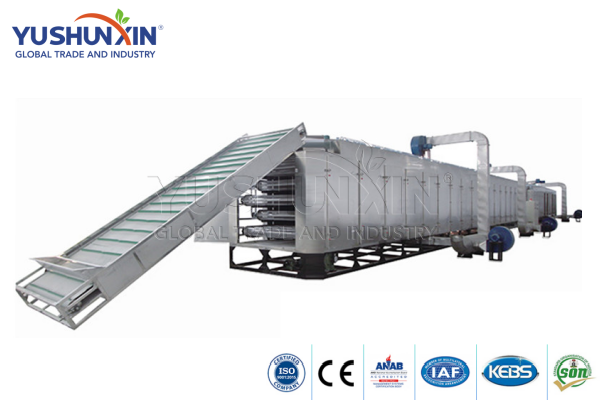
To go from 35% to 5%, industrial producers typically use hot-air drying with controlled airflow. Options include a belt dryer (gentle, uniform, good for maintaining shape), a tunnel dryer (simple and scalable), or a rotary dryer (fast but can chip briquettes if not tuned). If available, recover waste heat from carbonization kilns, boilers, or generators; using flue gas through a heat exchanger can cut operating costs while keeping smoke and ash away from the product. In most setups, target drying air temperatures around 80–120°C for safe, consistent drying without surface hardening.
Step 4: Prevent Case Hardening and Cracking
Drying too hot, too fast can “seal” the outer layer, trapping moisture inside (case hardening). Use staged drying: begin with higher airflow and moderate heat to remove surface water, then gradually increase temperature to drive internal moisture out. Maintain strong air circulation and avoid stacking briquettes too tightly. Good ventilation and controlled residence time are often more important than extreme temperature.
Step 5: Measure Moisture and Control the Process
To reliably hit 5%, use regular moisture testing (portable moisture meter plus oven-dry checks for calibration). Track inlet/outlet moisture, dryer temperature, airflow, and residence time. Finally, cool briquettes before bagging to prevent condensation inside packaging. With proper dewatering, optimized pressing, staged hot-air drying, and simple quality control, reducing moisture from 35% to 5% becomes faster, cheaper, and far more consistent. Visiting: https://www.ysxcharpro.com/product/briquette-dryer-machine/
Leave a Reply